Episode 111 of the Public Key podcast is here and this is our “Live from Links” series, where we showcase our podcasts recorded live at the Chainalysis Links Conference in NYC. MiCA regulation has seemingly provided clarity for EU nations to innovate in banking and consider DLT and digital asset strategies. We speak with Mico Curatolo (Co-Head, DLT and Digital Assets Team, Banca Sella) who shares his Bank’s experience in Italy on crypto custody, stablecoins, CBDCs and other digital asset and regulatory topics
You can listen or subscribe now on Spotify, Apple, or Audible. Keep reading for a full preview of episode 111.
Public Key Episode 111: MiCA’s regulatory landscape and the future of digital assets in Europe
“I’m not excited for what blockchain and DLTs can bring to the banking ecosystem, but I’m more excited to see how working on the same technology will bring together different market players.” – Mico Curatolo
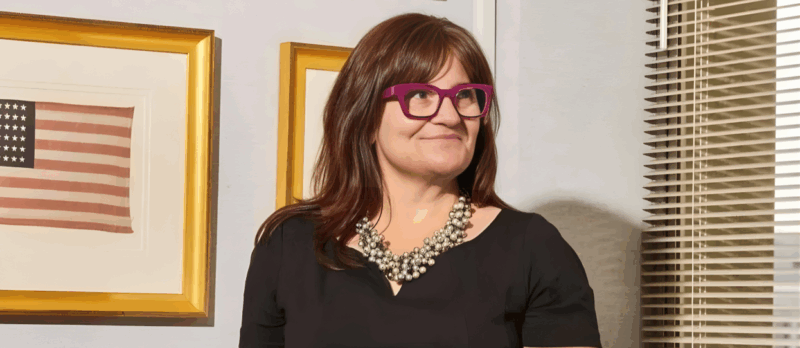
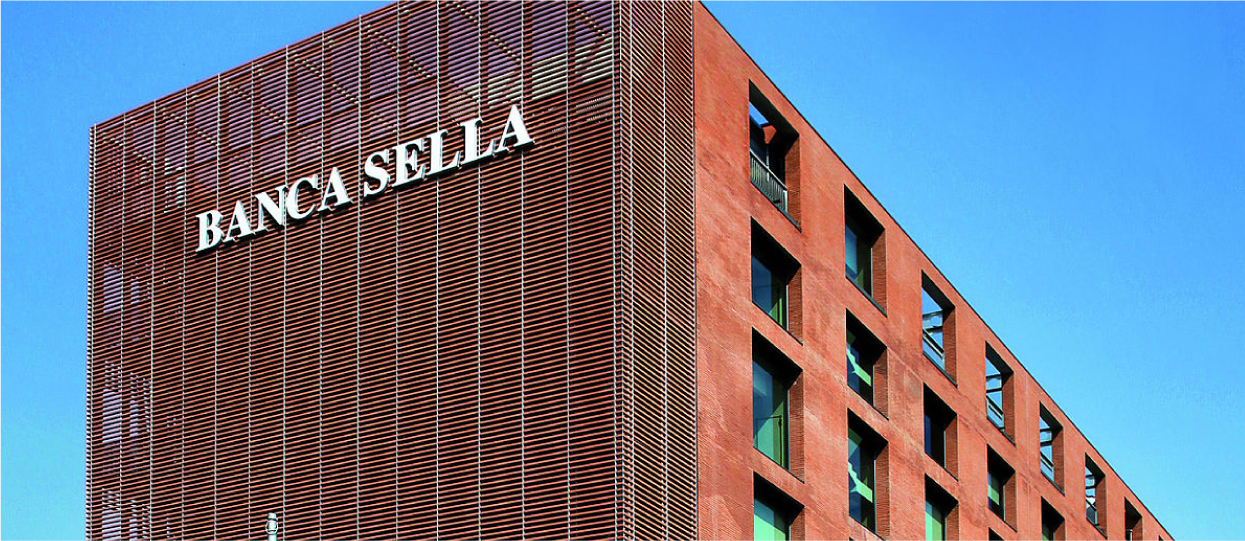
In this episode, Ian Andrews (CMO, Chainalysis) speaks to Mico Curatolo (Co-Head, DLT and Digital Assets Team) of Banca Sella, which is an established bank in Italy with a long history of innovation and cutting-edge technologies in the financial ecosystem.
Mico discusses the bank’s strategy around DLT and digital assets, including their focus on custody solutions and their plans to launch a proprietary retail custody solution.
He explains the regulatory landscape with the implementation of MiCA and shares insights on the appetite for digital assets in Italy, the impact of the Bitcoin ETFs, and the future of stablecoins and CBDCs in Europe.
今回のエピソードの名言
“I’m not excited for what blockchain and DLTs can bring to the banking ecosystem, but I’m more excited to see how working on the same technology will bring together different market players.” – Mico Curatolo (Co-Head, DLT and Digital Assets Team, Banca Sella)
エピソードの分単位の解説
2 | Exploring Banca Sella’s traditional legacy and digital asset and open banking ventures
6 | The crypto and digital asset market and regulatory environment in Italy
8 | Banca Sella’s DLT, digital asset and custody strategy
11 | Dissecting Bitcoin ETFs, stablecoin regulations and the future of bank partnerships
16 | What the future of CBDCs in Europe will look like
18 | Embracing digital assets and collaborative innovation in Europe
20 | Working on cutting edge technology and collaboration of industry players
関連リソース
『Chainalysis 』が提供する、今回の『公開鍵 』のエピソードと完璧に相性の良いその他のリソースもぜひご覧ください。
- Website: Banca Sella: 140 Years in Banking and Leading Innovation
- Website: Sellalab: Impact Innovation Platform for SMEs
- Article: Increasing the Focus on Trade-Based Money Laundering
- YouTube: Chainalysis YouTubeページ
- ツイッター: Chainalysis ツイッター: 信頼を築くブロックチェーン
- TikTok: 人々、企業、政府の間で#ブロックチェーンへの信頼を築く。
- Telegram:Chainalysis Telegram上で
本日のエピソードの出演者
- イアン・アンドリュース * 司会 * (Chainalysis 、最高マーケティング責任者)
- Mico Curatolo (Co-Head, DLT and Digital Assets Team, Banca Sella)
本ウェブサイトには、[email protected], Inc. またはその関連会社(以下、総称して「[email protected]」)の管理下にない第三者のサイトへのリンクが含まれている場合があります。Chainalysis, Inc. またはその関連会社(以下、総称して「Chainalysis」)の管理下にはありません。当該情報へのアクセスは、Chainalysis が当該サイトまたはその運営者との提携、支持、承認、または推奨を行っていることを意味するものではなく、Chainalysis は、当該サイトで提供される製品、サービス、その他のコンテンツについて一切の責任を負いません。
当社のポッドキャストは情報提供のみを目的としており、法律、税務、財務、または投資に関するアドバイスを提供するものではありません。リスナーの皆様は、こうした決定を行う前に、各自のアドバイザーに相談してください。『Chainalysis 』は、本コンテンツの利用に関連して、つながり において行われたいかなる決定、その他の作為または不作為についても、一切の責任を負いません。
Chainalysis 当社は、特定のポッドキャスト に掲載されている情報の正確性、完全性、適時性、適合性、または有効性を保証するものではなく、当該資料のいかなる部分における誤り、欠落、またはその他の不正確さに起因するいかなる請求についても責任を負いません。
特に断りのない限り、特定の製品や団体への言及は、Chainalysis による推奨や推薦を意味するものではありません。ゲストが表明する見解はあくまで個人のものであり、番組への出演は、当該ゲストやその代表する団体に対する推奨を意味するものではありません。Chainalysis の従業員が表明する見解や意見は、当該従業員個人のものであり、必ずしも会社の見解を反映するものではありません。
文字起こし
イアン:
Hi, everyone. We’re back with another episode of Public Key, Live from LINX. I’m your host, Ian Andrews.
On this episode, I’m joined by Mico Curatolo, who’s Co-Head of DLT & Digital Assets at Banca Sella. Mico.
Mico:
Thank you for having me here. It’s a pleasure.
イアン:
Thank you for traveling all the way from Milan, Italy, to join us at LINX. It’s amazing to have you.
Mico:
It’s so exciting to be in New York City, so I’m super happy.
イアン:
It is the financial capital of the world. I imagine many of our listeners… We have people that enjoy the podcast all around the world, but I would imagine many of them, this might be the first time they’re hearing about Banca Sella. So maybe we can start with just a little background on the business. Who do you work with? What’s the focus of the company? And then we’ll get into why you’re here at this Crypto Conference.
Mico:
Banca Sella is almost an 140-years-old bank, so quite-
イアン:
すごい。
Mico:
… quite an established player in the Italian market. It has a long-lasting history of innovation, and it always had been at the forefront of cutting-edge technologies related to the financial ecosystem.
Just to give you a bit more of background, it is a medium-sized bank, the largest private-owned bank active in Italy, still preserving the name of the family that is behind the group. And it was one of the first ATM cash machine in Italy, one of the first internet banking solution in Italy, at the forefront of open banking and open finance revolution after PSD2 coming into force in Europe. So always played a major role in understanding where the innovation was in the banking ecosystem.
The group itself is made up of more than 20 companies. Obviously, Banca Sella is the major one, but it covers a large spectrum of activities; retail banking, corporate investment banking, technology solution for the financial ecosystem, and so on.
イアン:
It’s amazing to hear that story of enduring innovation because most companies, as they get old, they get very conservative. They protect the business they have, and it gets very hard to look to the future,, and particularly to adopt a new technology. And yet, your title is Co-Head of DLT & Digital Assets. So what’s the strategy around DLT and digital assets?
Mico:
First of all, the footprint of the group started before the Competent Centers with our Challenger Bank hype that has more than one million and a half customer in the market. We launched the first crypto wallet with Bitcoin in, and it was some years ago already.
イアン:
うわっ。
Mico:
And we are also supporting clients that add direct exposure to digital assets back in the last 10 years.
Moreover, we are also serving, I would say, the vast majority of the virtual asset service provider in Italy with banking as a service-
イアン:
すごい。
Mico:
… solutions. And so, understanding the market dynamics led us to the creation of this Competent Center that is actually a cross-functional team made up of tech people, business people, and people from the control functions working together.
We designed a strategy for the whole group, so not only for Banca Sella, and we will get our first milestone in the next three years since our strategic plan just started. And we are covering a large spectrum of activities. So we start from poor R&D activities to frame the opportunity producing feasibility studies. We directly take care of all the learning activities related to digital assets inside the group, and we are also building new services and products for clients. So we also got end-to-end until they go-to-market activities.
イアン:
Amazing. You mentioned that you’re banking most of the virtual asset service providers in Italy. In the US, we had a bit of a banking crisis last year, and the banks that were crypto- or digital asset-friendly, a number of them no longer exist. What’s been your experience through Crypto Winner servicing that type of business?
Mico:
First of all, the due diligence you need to do for each player requesting banking services is very high. Banca Sella has a long-lasting history of capability and expertise in these, both on the onboarding side of the funnel and on ongoing activities.
Obviously, it is not always a seamless journey, so it’s sometimes happened that we had to close the relationship with this player, but I believe that that is a good space to mutually understand each other so that the vasper can maybe raise their level of attention for what regards transactions and clients, and the bank can benefit of this relationship for a better understanding of market dynamics.
イアン:
Yeah. What’s the appetite for digital assets in Italy like right now, both at a retail and an institutional level?
Mico:
From a customer adoption point of view, Italy is quite an active market. We are talking about millions of people that are directly exposed to digital assets and that they actually hold. I would say the majority of business customers are still waiting for the market to evolve in order to get to a massive adoption. But still, in the last few years, we saw some businesses starting considering having treasury management through digital assets or also issuing NFTs or-
イアン:
I was-
Mico:
… digital coins.
イアン:
うん。
Mico:
I think that we will see many more players getting into the market soon.
From a regulatory standpoint, the regulator in Italy, Banco de Italia, it always has been very conservative to work with crypto. Obviously, with MiCA coming into force in next few months, we expect the boundaries to open a bit.
Frankly speaking, we are working a lot with the regulator to understand how we can mitigate the risks, and how we can maybe leverage on the same set of tools in order to better understand how to protect clients and scale solutions.
イアン:
Yeah. Exciting. You mentioned that you’re building some end-to-end DLT solutions for customers. Can you be more specific about-
Mico:
うん。
イアン:
… one or two of those projects?
Mico:
We are mainly covering a few topics right now. The first one is the custody. We would love to get to the market soon with a proprietary custody solution starting from a retail base and with a very reduced number of assets as a starting point. This mainly because what is very interesting to understand is that together with the technological effort required to build up a custody solution, the main effort required from banks right now is to proper equip the organization to later perform all the controls related to the custody of digital assets. And this is the situation we are right now. So we are putting an amazing effort in educational activities inside the group, across all the areas of the group. So not only business but also tech and control functions. And we are also hiring new talented people to complete our skillset.
イアン:
Yeah. That’s interesting to hear that you’re building out custody, and that’s for your retail customers?
Mico:
We will start from a retail custody, and we will probably focus as a starting point to high net worth individual customer base. But we expect them to scale the value-added services and the custody itself to our targets of clients.
イアン:
Yeah. How do you think about the business strategy there since you’re also banking virtual asset service providers to introduce your own custody solution? Does that set you up as a competitor to some of your customers today?
Mico:
I don’t think so. I think that in the medium term, what institutional player will bring to the market is a completely different set of value-added services. So I see that in the medium term exchanges will do the exchanges and custodian will do the custodian, and there will be a common ground of services that the parties can share. But, for example, when it comes to consider what happens when you pass away, what happens of your assets when you pass away or how to produce tax reports, these are kind of services that I see are more close to the classic relationship that a client has with his banking provider.
イアン:
Sure. And you actually bring up a great point that separation of the custodian responsibility from the exchange responsibility is kind of a natural thing in traditional finance in the equities markets, for example. In crypto, we’ve unnaturally combined these and it’s led to some disastrous results when some of the exchanges have gone bankrupt the last few years, massive client losses.
Mico:
I think that these might have happened because of a lack of the regulation and the lack of the regulation in many geography prevented the entrance of institutional player into the market. So it was strange, but I wouldn’t bet this will last the same in the next few years. Let’s see.
イアン:
Yeah, yeah. Well, I think it creates a great market opportunity for you.
I’m curious about other things beyond custody. One of the hot topics in the United States the last few months has been the Bitcoin ETF products which have drawn in billions in dollars of capital in a very short period of time. Our CEO showed a chart opening the conference yesterday about the pace of assets under management into the Bitcoin ETFs relative to gold, which launched a few decades ago. How do you think about that experience happening here in the US, and what does it mean for your business in Italy?
Mico:
Obviously, it is impressive to understand. Yesterday, I was listening to the panel and when the Black Rock professional tells the audience, “This is the most successful ETF ever,” this is something impressive, for sure. And I believe that it is going to be not only in the short term, but in the medium term, a good news for the industry worldwide bringing some security and bringing more clients and maybe different clients to the market.
This is affecting also the European market. Clients in Banca Sella may find these kind of products, so electronic-traded funds with crypto collateral since quite a while, but we are not directly giving consultancy around that. And obviously, we don’t have also a strong heritage on pure investments, so we believe we are not the most exposed players to this kind of products.
It is interesting to understand if the ETF listing it is still reducing spaces for institutional player getting in, or if in the medium term this will play a progressive role, maybe convincing some other banks to enter the space, maybe partnering with asset managers. We’re going to see.
イアン:
Yeah, it’s going to be an exciting next few months to see how it affects the space. But like you said, the comments from the guests from Black Rock were… It was very clear that every institution is now trying to formulate some sort of a digital asset strategy.
One of the other big topics at the conference has been stablecoins, and I think the current stablecoin market capitalization is now about 150 billion US dollars. Most of it in Tether and USDC, the Circle product, and nearly all of it dollar-denominated.
You mentioned the MiCA Regulations coming into effect shortly in the European market, and to the credit of the European Union, first to market with comprehensive digital asset regulation. But it creates an interesting situation where, as I read it, potentially, all those US dollar-denominated stablecoins are going to need to be delisted from European exchanges. I’m curious if you’ve spent any time thinking about this and how you expect the market to play out.
Mico:
We are very carefully looking at the market dynamics. I need to confirm you that we see that threat’s coming, and it’s going to be very interesting understanding how USDC and USDT may get out of this situation.
I would say that we will probably see more Euroback token getting to the market because it seems to me it is easier for that player to list another token rather than to move the reserves elsewhere or to block them. And this might also give an additional opportunities to a financial institution across Europe that might be interested in jumping in the stablecoin markets, maybe listing their own or, furthermore, going for a systemic approach and maybe listing a stablecoin that is backed by different financial institution across Europe.
イアン:
Is there anything you want to announce right now? Is there a-
Mico:
No. [inaudible 00:17:20].
イアン:
… Banca Sella coin coming?
Mico:
We studied a lot the possibility of launching a new money token. Theoretically speaking, we also deep-dived a lot on what kind of measure you could put in to act in a kind of closed loop in which you always know where the money token is, who is holding it, if it’s related to a blacklisted wallets for example, or bad activities. And I believe it is super interesting for financial institutions all across Europe, but not only to study it because there’s a huge opportunity there.
Nevertheless, for what is around your question, my perception now, it is very hard for a financial institution that is not systemic or very, very big to issue a stablecoin alone. It might be more interesting to take into consideration in the short term to maybe partner with other banks and go for a systemic approach, and we’re going to see if something happening.
イアン:
Yeah. What is your opinion on CBDCs? I know there’s a number of projects outside the EU boundary in Northern Europe. Like Norway, I think, is maybe the most progressed that I’ve heard about. The EU also has a project that I think is kind of emerging, I’ll politely call it. Do you think there’s any utility in a CBDC?
Mico:
First of all, I think that a digital asset team shall pay a lot of attention to what is going on around CBDCs. That’s why our Competent Centers is also directly exposed to the work that the ACB is doing.
It is still unclear what the final design of the digital euro will be, so it is hard for me to understand 100% what are the implication, and also answering your question. But I believe that the main point for the ACB right now is around monetary sovereignty rather than other uses and, therefore, I’m 100% convinced that they will not abort the project. The digital euro will see the light. Some more years of work are required, and also a deeper understanding of the needs of the market players because still it’s unclear what’s the role of commercial banks with the digital euro, with the digital euro coming. But I don’t see an overlap with stable coins. It will be another tool with another usage. And we are going to see it. We’re going to see it.
イアン:
Yeah. Some of the projects seem to be more focused on the wholesale side of banking, so the central bank to the banks themselves rather than retail where you or I, as individuals, could actually hold the asset directly. I know the Norway project actually is intending to be a retail-facing token because it seems like they’re trying to disrupt some of the payments monopoly that currently exists in that country. But I could imagine if it were a retail-facing project from the ECB, that could disrupt the current incumbent banking system quite a bit.
Mico:
Absolutely. And that’s why the remuneration model towards the private sector is super important. And I believe, in a short while, we will see all financial institutions asking for clarification on that.
I believe that digital euro will cover that part on B2B retail payments as a new circuit, let’s say. And also, I see some effort on covering use cases on the wholesale side. Still, there is some space for businesses solution and inter-banking activities that might be covered by a private use case.
イアン:
Yeah, yeah. When you start to think to the future with MiCA coming into force, it seems like broader support for digital assets, an endorsement of legitimacy, maybe. What’s your expectation for the landscape across Europe when it comes to digital assets?
Mico:
I believe that… This can sound surprising, but I believe that providing to the market a comprehensive framework will play a progressive role for the industry. And I believe many more players that were maybe waiting for something to happen will start now experimenting more, entering the market more, and understanding how to deal with this new framework.
MiCA itself, I believe it’s the first step of a long journey, let’s say. As it usually happens with umbrella regulation, it is a first effort, very comprehensive, also very comprehensive, but still with some gray areas, with a lot of area of improvements. And I believe that a good team efforts in between regulators, market players, financial institution, tech companies, scale-ups together dealing with this new regulation will also help European Union to further improve it. And I believe this is also putting Europe on a spot with this new framework. For sure, we can gain traction.
And I was listening to a lot of contents in links these two days, and I believe a lot of market players understand that a lack of regulation like the one that you have in the United States right now is not a good news for the market, and it’s preventing a lot of players to directly get in.
イアン:
Yeah. My customary closing question. When you think about the year ahead, what gets you most excited, either the crypto industry specifically or things that you’re working on at Sella?
Mico:
Look, Sella gave me the amazing opportunity of dealing with a lot of cutting-edge technologies in the last six years that I’ve spent in the group. And I’ve learned not to get in love with the single technology.
イアン:
It’s smart.
Mico:
So I’m not excited for what blockchain and DLTs can bring to the banking ecosystem, but I’m more excited to see how working on the same technology will bring together different market players, maybe getting to new solution, but mainly getting to a better protection or clients. And we’re going to see a big growth of these if everybody will work together in the same direction.
イアン:
Fantastic. I love that vision. Thanks so much for joining us on Public Key.
Mico:
It was such a pleasure.
イアン:
うん。
Mico:
ありがとうございます。